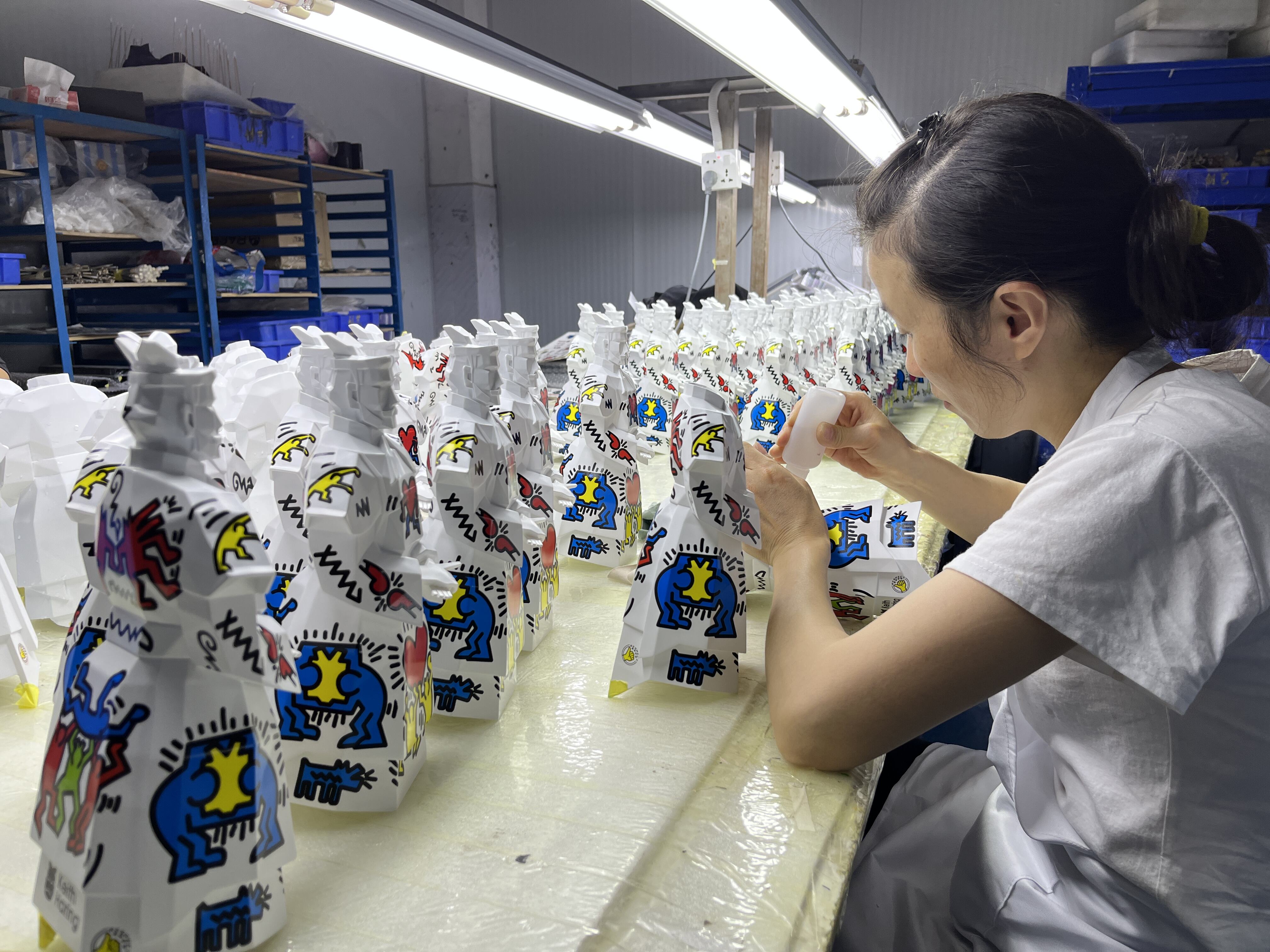
One Piece Model Factory: Revolutionary Integrated Manufacturing Solutions for Modern Industries

Get a Free Quote

Our representative will contact you soon.
Email
Name
Company Name
Mobile/WhatsApp
Message
0/1000

one piece model factory

A one piece model factory represents a revolutionary approach to manufacturing that integrates multiple production processes into a single, seamless operation. This innovative manufacturing system combines design, prototyping, production, and quality control under one unified framework, eliminating traditional barriers between different manufacturing stages. The one piece model factory utilizes advanced automation technologies, artificial intelligence, and sophisticated machinery to create products from raw materials to finished goods without transferring items between separate facilities. This comprehensive manufacturing approach significantly reduces production time, minimizes material waste, and ensures consistent quality throughout the entire manufacturing cycle. The technological foundation of a one piece model factory relies on interconnected systems that communicate in real-time, enabling precise coordination between various production elements. Smart sensors monitor every aspect of the manufacturing process, while machine learning algorithms optimize production parameters continuously. The factory incorporates flexible manufacturing cells that can be reconfigured quickly to accommodate different product specifications or design changes. Digital twin technology creates virtual replicas of the physical production environment, allowing operators to simulate and test modifications before implementing them in the actual manufacturing process. Applications of the one piece model factory span across numerous industries, including automotive, electronics, consumer goods, medical devices, and aerospace components. Companies utilize this manufacturing approach to produce customized products efficiently while maintaining economies of scale typically associated with mass production. The system excels in creating complex assemblies that would traditionally require multiple suppliers and extensive coordination efforts. Industries requiring rapid prototyping and short production runs particularly benefit from the one piece model factory approach, as it enables quick transitions between different product variants without significant setup costs or time delays.

Popular Products

The one piece model factory delivers substantial cost savings by eliminating intermediate transportation, storage, and handling expenses associated with traditional multi-location manufacturing. Companies reduce their overall operational costs by consolidating equipment, utilities, and workforce requirements into a single location. This streamlined approach minimizes inventory holding costs since materials flow directly through the production system without requiring extensive warehousing between manufacturing stages. Quality control becomes significantly more effective within a one piece model factory environment. Manufacturers can monitor and adjust quality parameters continuously throughout the production process rather than discovering defects only after completion. This real-time quality management prevents costly rework and reduces material waste substantially. The integrated quality systems enable immediate corrective actions when deviations occur, ensuring consistent output standards. Speed represents another crucial advantage of the one piece model factory system. Traditional manufacturing often involves lengthy lead times due to coordination requirements between multiple suppliers and facilities. The integrated approach eliminates these delays, enabling rapid response to market demands and customer requirements. Companies can reduce time-to-market significantly while maintaining flexibility to accommodate design changes or customization requests. Environmental benefits emerge naturally from the one piece model factory approach. Reduced transportation requirements lower carbon emissions associated with moving materials and components between different locations. The optimized production processes minimize energy consumption and material waste, contributing to more sustainable manufacturing practices. Companies achieve better resource utilization through precise material planning and automated waste reduction systems. Flexibility stands as a defining characteristic of the one piece model factory model. Manufacturers can switch between different product lines quickly without extensive reconfiguration or setup procedures. This adaptability enables companies to respond effectively to changing market conditions, seasonal demands, or customer preferences. The system supports both high-volume production runs and small-batch customized orders with equal efficiency. Supply chain resilience improves dramatically when companies implement the one piece model factory approach. Reduced dependence on multiple external suppliers minimizes risks associated with supply chain disruptions. Companies maintain better control over their production schedules and can continue operations even when external suppliers face challenges. This self-sufficiency provides competitive advantages during uncertain market conditions.

Practical Tips

What are the advantages of using polyresin for making statues?

12

Sep

What are the advantages of using polyresin for making statues?

Introduction For centuries, the art of statue-making was dominated by a few revered materials: the patience of clay, the permanence of bronze, the elegance of marble, and the affordability of plaster. Each came with its own set of limitations—...
View More
How can the coloring and finishing techniques for polyresin toys enhance their value?

12

Sep

How can the coloring and finishing techniques for polyresin toys enhance their value?

Introduction You're examining two polyresin toys of the same character. One has flat colors, visible brush strokes, and a plastic-like sheen. The other boasts subtle skin tones, weathered armor that tells a story, and a finish so realistic...
View More
Beginner's Guide to Creating Stunning Resin Crafts

26

Sep

Beginner's Guide to Creating Stunning Resin Crafts

Mastering the Art of Epoxy Resin Creation The world of resin crafts has exploded in popularity, captivating artists and hobbyists with its limitless creative potential. From elegant jewelry to mesmerizing home decor, epoxy resin offers a versatile me...
View More
Essential Collection Model Care and Maintenance Guide

29

Oct

Essential Collection Model Care and Maintenance Guide

Preserving the Value of Your Prized Collectibles For enthusiasts and collectors alike, maintaining a collection model represents more than just caring for a physical item - it's about preserving history, passion, and investment. Whether you're showca...
View More

Get a Free Quote

Our representative will contact you soon.
Email
Name
Company Name
Mobile/WhatsApp
Message
0/1000

one piece model factory

Advanced Integration Technology Systems

Advanced Integration Technology Systems

The one piece model factory incorporates cutting-edge integration technology that revolutionizes traditional manufacturing approaches by connecting every aspect of production into a cohesive, intelligent network. This sophisticated technological infrastructure utilizes Internet of Things sensors, artificial intelligence algorithms, and real-time data analytics to create an unprecedented level of manufacturing coordination and efficiency. The integration technology enables seamless communication between different production stages, automatically adjusting parameters based on real-time feedback and performance metrics. Advanced robotics systems work in perfect harmony with human operators, handling repetitive tasks while allowing skilled workers to focus on complex problem-solving and quality assurance activities. The technology platform supports predictive maintenance capabilities, analyzing equipment performance data to anticipate potential issues before they cause production disruptions. This proactive approach significantly reduces unexpected downtime and maintenance costs while ensuring consistent production output. Machine learning capabilities continuously optimize production processes by analyzing historical data and identifying patterns that improve efficiency and quality outcomes. The integration extends beyond the physical manufacturing equipment to include enterprise resource planning systems, supply chain management platforms, and customer relationship management tools. This comprehensive connectivity enables the one piece model factory to respond dynamically to changing customer demands, automatically adjusting production schedules and resource allocation based on real-time order information. Quality control systems integrate seamlessly with production equipment, enabling automated inspection processes that detect defects immediately and trigger corrective actions without human intervention. The technology infrastructure also supports advanced simulation capabilities, allowing manufacturers to test new production scenarios virtually before implementing changes in the physical environment. This capability reduces risks associated with process modifications and enables continuous improvement initiatives without disrupting ongoing production operations. Data security and cybersecurity measures protect the integrated systems from potential threats while ensuring compliance with industry regulations and standards.
Sustainable Manufacturing Excellence

Sustainable Manufacturing Excellence

The one piece model factory establishes new benchmarks for sustainable manufacturing by integrating environmental responsibility into every aspect of production operations. This comprehensive sustainability approach goes beyond simple compliance requirements to create genuinely eco-friendly manufacturing processes that benefit both companies and the environment. Energy efficiency represents a cornerstone of sustainable manufacturing excellence within the one piece model factory framework. Advanced energy management systems monitor and optimize power consumption throughout the facility, utilizing renewable energy sources wherever possible and implementing sophisticated load balancing techniques to minimize overall energy requirements. Smart lighting systems, efficient heating and cooling technologies, and optimized equipment operation schedules contribute to substantial reductions in energy consumption compared to traditional manufacturing facilities. Waste reduction initiatives within the one piece model factory eliminate unnecessary material consumption through precise planning and automated optimization systems. Advanced material handling technologies ensure minimal waste generation during production processes, while recycling systems capture and reprocess waste materials back into the production cycle. The integrated approach enables manufacturers to achieve near-zero waste objectives by designing products and processes that minimize material requirements while maximizing resource utilization efficiency. Water conservation measures incorporate closed-loop systems that recycle and purify water used in manufacturing processes, significantly reducing overall water consumption and eliminating contaminated discharge into local water systems. Chemical usage optimization reduces harmful substances in manufacturing processes through advanced material selection and process engineering techniques. The one piece model factory approach enables manufacturers to achieve various environmental certifications and sustainability standards, demonstrating their commitment to responsible manufacturing practices. Life cycle assessment capabilities integrated into the production systems enable manufacturers to evaluate and minimize the environmental impact of their products throughout the entire product lifecycle, from raw material extraction to end-of-life disposal or recycling. Carbon footprint reduction becomes achievable through optimized transportation, efficient production processes, and renewable energy utilization, enabling companies to meet increasingly stringent environmental regulations while maintaining competitive production costs.
Customization and Flexibility Solutions

Customization and Flexibility Solutions

The one piece model factory excels in delivering unprecedented customization capabilities that enable manufacturers to meet diverse customer requirements without sacrificing production efficiency or cost-effectiveness. This flexible manufacturing approach combines advanced automation technologies with modular production systems to create an adaptable manufacturing environment capable of producing both standardized products and highly customized solutions within the same facility. Mass customization becomes economically viable through the one piece model factory approach, enabling manufacturers to offer personalized products at prices comparable to mass-produced items. Flexible manufacturing cells can be reconfigured rapidly to accommodate different product specifications, sizes, or design variations without requiring extensive retooling or setup procedures. Advanced programming capabilities allow production systems to switch between different product configurations automatically, reducing changeover times from hours or days to minutes. The modular design philosophy extends throughout the entire manufacturing system, enabling companies to scale production capacity up or down based on demand fluctuations without significant capital investments or facility modifications. Rapid prototyping capabilities integrated into the one piece model factory enable manufacturers to develop and test new product concepts quickly, accelerating innovation cycles and reducing time-to-market for new products. Customer-specific requirements can be incorporated into production schedules seamlessly, enabling build-to-order manufacturing strategies that eliminate finished goods inventory while ensuring customer satisfaction. Digital manufacturing technologies support virtual product configuration, allowing customers to visualize and modify products before production begins. This capability reduces errors and ensures that finished products meet customer expectations precisely. Batch size flexibility enables the one piece model factory to handle orders ranging from single units to large production runs with equal efficiency, making it suitable for both niche markets and mainstream applications. Supply chain integration supports just-in-time manufacturing strategies while maintaining the flexibility to accommodate rush orders or expedited delivery requirements. Quality assurance systems adapt automatically to different product specifications, ensuring consistent quality standards regardless of customization levels or production volumes.

Get a Free Quote

Our representative will contact you soon.
Email
Name
Company Name
Mobile/WhatsApp
Message
0/1000